On Saturday, October 17 at 11:59 PM ET, Elegelli stops taking orders from the United States. No date to reopen.
00Days
00Hours
00Min
00Sec
Only 9 cordless drills left
New US import controls on cosmetics change how we can ship to you. Order now to make our final US shipments. Duties included, no surprise fees at your door.
Japanese Manicure: What It Is, How to Do It at Home and Is It Worth It?
Buffed with a paste and a powder, bare nails can shine without any polish. Learn how a Japanese manicure works, how to do it safely at home and when a Russian or gel manicure suits you better.
by Anastasia Kovalenko
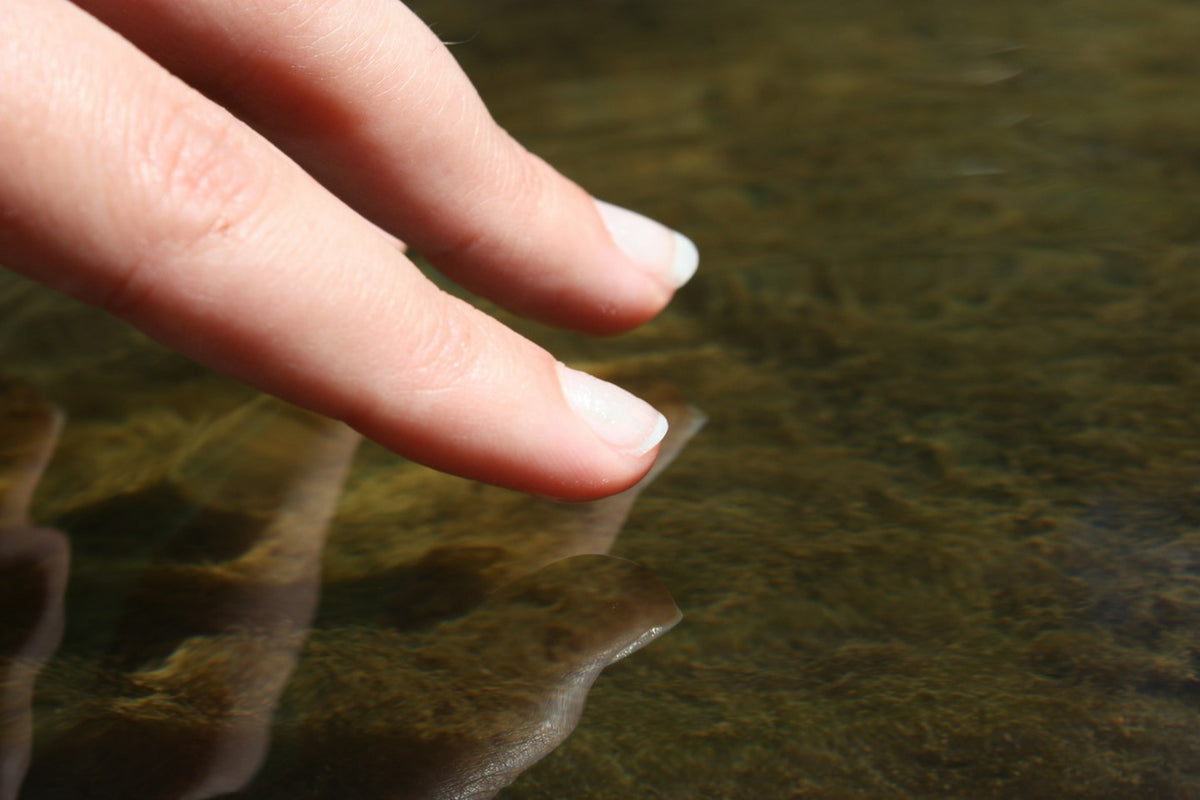
Hand with natural, softly shiny nails under running water
Japanese Manicure: What It Is, How to Do It at Home and Is It Worth It?
A Japanese manicure gives bare nails a natural shine without any polish: a conditioning paste and a fine powder are buffed into each nail with a leather buffer. Because nothing is painted on, it needs no lamp, no drying time and no removal.
This guide explains how it works, how to do a Japanese manicure at home without thinning your nails, and how it compares with Russian and gel manicures.
What is a Japanese manicure?
A Japanese manicure is a natural-nail treatment that replaces polish with a paste, a powder and careful buffing. The nails are shaped and the cuticles tidied, then the paste is worked in with a leather or chamois buffer. A fine powder, buffed in afterwards, brings up the shine. Pastes vary between brands but typically contain keratin, beeswax or minerals.
The method comes from Japan and is now offered in salons across Europe. It shouldn't be confused with a Japanese gel manicure or Japanese nail art, which are both about colour and decoration.
How a Japanese manicure creates natural nail shine
Tiny ridges and dry, lifted flakes scatter the light, which is why an untreated nail appears dull. The paste fills the finest lines and leaves a thin, waxy film, and the friction of the leather warms it so that it spreads. The powder then polishes that film to a high gloss. Because the film sits on the surface, hand-washing, washing-up and cleaning products wear it away within one to two weeks.
Natural nails with a healthy shine.
Japanese manicure before and after: what to expect
The difference is most visible on nails that start out dull, slightly ridged or dry around the cuticles. Nails just out of gel are a typical case: prep and removal leave the surface matte, and one treatment brings the gloss back. Straight afterwards, the nails catch the light, feel smoother and have a clean cuticle line, which makes short nails in particular appear groomed.
Deep ridges, white spots and discolouration stay as they are, because buffing only works on the surface. Before-and-after photos are often taken minutes after buffing, when the shine is at its brightest.
How to do a Japanese manicure at home
The technique is easy to learn, because the main skill is controlling the pressure. The buffer should glide over the nail and leave it pleasantly warm; if it feels hot, you're pressing too hard or staying too long on one spot.
What's in a Japanese manicure kit?
A typical kit contains a fine nail file, sometimes a smoothing file, two leather or chamois buffers (one for paste, one for powder) and a pot of each. Leather is porous and can't be disinfected like a metal tool, so each buffer should be used by one person only. In a salon, expect a new buffer or one kept just for you.
Japanese manicure step by step
Start with clean, bare nails. Remove any polish, then wash your hands so no cream or oil is left on the nails.
Shape the nails. Use a fine file (180 grit or finer) or a glass file on dry nails, working from each side towards the centre so the tip doesn't split or peel.
Push back the cuticles. Soften the skin with a minute or two in warm water, then ease it back with an orange stick or a rubber-tipped pusher. Lift off any dead skin stuck to the nail, never cut living skin, and dry the nails well before buffing.
Smooth ridges only where needed. If your kit includes a smoothing file, give raised areas two or three light strokes. Don't try to file deep ridges flat, as that thins the nail, and skip this step on fragile nails or nails just out of gel.
Buff in the paste. Put a tiny amount on each nail and work it in with the first buffer, using quick, gentle strokes, until no paste is visible.
Buff in the powder. Dust a little powder over the nail, or onto the second buffer if your kit says so, and buff until the whole nail gleams.
Finish with oil. Brush away any leftover powder and massage a drop of cuticle oil into the skin around each nail.
Repeat the treatment every two to three weeks, once the shine has faded. Buffing more often adds nothing and gradually thins the nail. A fingernail takes several months to grow from cuticle to tip, so the same stretch of nail is buffed at every session until it reaches the free edge.
Japanese manicure benefits and limits
The main benefit is a groomed, healthy-looking finish with nothing to maintain: it can't chip or leave a regrowth line. It suits anyone who wants neat hands without colour, including people whose work rules out polish, such as nurses and chefs. It's also a good option for men, and for a groom whose hands will be photographed during the ring exchange.
Many people book one between gel manicures to give their nails a rest. Nails don't actually need to "breathe", as the living part of the nail gets its oxygen from the blood supply. Still, a few weeks without product lets you check their condition and start growing out any thin patches left by heavy filing.
On the downside, stains or an uneven nail bed stay visible with no colour on top. A Japanese manicure also can't be combined with gel on the same nails, since gel prep buffs the shine straight off.
Above all, a Japanese manicure won't cure weak nails: the paste works on the surface of the nail you already have and can't change the nail growing in behind it. Nails that change colour, thicken or lift away from the nail bed need a doctor's opinion before any manicure.
Japanese vs Russian manicure vs gel: which should you choose?
Choose a Japanese manicure for bare, glossy nails or a break between gel sets. For gel colour with a very clean cuticle line, book a Russian manicure. A standard gel manicure is the simplest way to wear colour for weeks.
A Russian manicure, also called an e-file or dry manicure, is done without soaking. The technician uses a nail drill fitted with small, fine bits to lift and remove the dead cuticle. Gel polish is then applied as close to the cuticle as possible, without touching the skin. That's what makes the line so crisp, and it's why regrowth takes longer to show.
The Russian method is also the most technical of the three, because in untrained hands a drill can nick the skin or leave grooves in the nail. If you're learning, our nail drill bits guide explains which bit does which job.
A gel manicure uses soak-off gel polish, cured layer by layer under a UV/LED lamp, for two to three weeks of chip-free colour on well-prepared nails. Our gel nails guide explains the different types of gel.
Japanese manicure
Russian manicure
Gel manicure
What it does
Cares for bare nails and gives them shine
Removes dead cuticle with a nail drill
Adds colour and protection that last
Colour
None
Usually gel polish
Gel polish in any shade
Equipment
File, leather buffer, paste and powder
Nail drill and bits, gel, UV/LED lamp
Gel, UV/LED lamp
How long it lasts
Shine fades in one to two weeks
Two to three weeks or more
Two to three weeks
Removal
None needed
Gel is soaked or filed off
Soaked or filed off
At home
Easy to learn
Needs training and practice
Some practice: thin coats, clean edges
Longer-lasting natural nail shine: rubber base and builder gel
If you like the bare-nail finish of a Japanese manicure but want it to last longer, a rubber base is the logical next step. Finished with a glossy top coat, a clear or tinted rubber base stays shiny for up to three weeks. Its flexible layer also protects bendy nails while they grow, which a paste can't do. The trade-off is a lamp for curing, then filing or soaking off at the end, depending on the formula.
The closest to a Japanese manicure is RB01 Rubber Base Transparent, which is invisible on the nail while it smooths and reinforces the surface. For more warmth, choose RB04 Peach Rubber Base: its peach tint evens out the colour of the nail bed and flatters golden and warm undertones. To add a little colour, apply one or two thin coats of 017 Silk, a light nude gel polish, over the clear base. Pale shades show every streak, so let each coat settle for a few seconds before curing.
RB04 Peach Rubber Base.
Longer nails, or nails that break at the sides, benefit from the extra structure of builder gel. A fresh ballerina pink such as B009 Rose Ballerine keeps the finish natural while building a slight apex over the stress area. Builder gel is filed rather than soaked off, and it's kept going with an infill every three to four weeks. Our guide to strengthening natural nails compares rubber base and builder gel in detail.
When you switch from a Japanese manicure to rubber base or gel, the waxy film on the nail has to go first, because gel can't grip it. After the usual cuticle prep, buff it away lightly, then cleanse and dehydrate each nail with Prep Booster.
On oily nails, or nails that tend to lift, add an acid-free primer. Keep the first layer thin and off the skin, cap the free edge and cure it for the time given in its instructions. Our guide to making gel polish last covers the full routine.
It's a manicure without polish. The nails are shaped, the cuticles pushed back and the surface buffed with a paste and a powder until the bare nail shines.
How long does a Japanese manicure last?
The shine lasts about one to two weeks. It fades faster on hands that are often in water, so wear gloves for washing up and cleaning.
How often should you get a Japanese manicure?
Every two to three weeks is enough, once the shine has faded. On thin or peeling nails, leave longer gaps and skip the smoothing file.
Is a Japanese manicure worth it?
Yes, if you like bare nails and want them shiny and tidy with no upkeep. Salon prices vary widely, but a home kit lasts for many treatments, as each nail needs only a little paste and powder. It won't strengthen weak nails or add colour, though, so if your nails bend or break, a clear rubber base will do more for them.
Which is better, Japanese or Russian manicure?
Neither is better, because they do different jobs. A Japanese manicure cares for bare nails, while a Russian manicure is a precise cuticle technique for gel colour, best left to a trained technician.
What is the healthiest manicure for nails?
The healthiest manicure keeps filing light, never cuts living skin and never involves peeling product off. With careful buffing, a Japanese manicure is among the gentlest options. Gel is fine for most healthy nails too, provided it's applied thinly and removed properly. Keep it off the skin, since uncured gel on skin is the main cause of gel allergy.
For bare-looking nails that stay glossy for weeks, choose a clear or tinted shade from our rubber base collection or a natural pink builder gel.
Rubber base smooths ridges, flexes with weak nails and can be worn alone for sheer, natural nails. How to apply it without flooding the cuticles, how long it lasts and how to remove it safely.
Greige for the office, a misty green-grey, charcoal and a silver cat eye for December: 10 grey nail designs with the steps to recreate them, and how to find the grey that suits your skin.