Gel Nail Allergy: Symptoms, Causes and How to Avoid It
Itching or redness around your nails hours or days after a gel manicure can be a sign of allergy. This guide explains why it develops, what to do if your skin reacts and how to prevent it.
Itching or redness around your nails hours or days after a gel manicure can be a sign of allergy. This guide explains why it develops, what to do if your skin reacts and how to prevent it.

A gel nail allergy is a skin reaction to the acrylates in gel, and it develops through repeated contact with uncured gel. It shows up as itching, redness, swelling or small blisters around the nails, usually several hours to a few days after a manicure, and once it has developed, it's usually permanent.
Most of that contact comes from three avoidable slips: gel on the skin before it cures, layers that never cure fully and the dust filed from them. This guide covers the symptoms, what to do if your skin reacts, how to prevent an allergy, what HEMA-free and TPO-free labels mean and your options if you're allergic.
| Question | The short answer |
|---|---|
| What is it? | An allergic skin reaction to (meth)acrylates, the ingredients that cure gel, after repeated contact with uncured gel. |
| What does it look like? | Itching, redness, swelling or small blisters around the nails, hours to a few days after a manicure. |
| What should I do? | Stop using gel, have it removed without peeling it and see a doctor or dermatologist. |
| What causes it? | Gel on the skin or cuticles, under-cured layers and filing dust. |
| How do I prevent it? | Keep every coat off the skin, cure each layer fully and never touch the sticky layer. |
| Does HEMA-free gel prevent it? | It removes one common allergen. No gel is allergy-free. |
Every UV/LED gel, from base coat to builder gel, is made from acrylates and methacrylates, often written together as (meth)acrylates. Under the lamp, these small liquid molecules link up into a hard layer, and the allergy risk comes mainly from gel that hasn't cured, or hasn't cured fully.
The smallest of these molecules pass into the skin most easily, and the best known is HEMA (hydroxyethyl methacrylate). With repeated contact, the immune system can become sensitised: it learns to treat them as a threat. Nothing shows at this stage, so it goes unnoticed.
Once you're sensitised, any new contact can set off a reaction, known as allergic contact dermatitis. Plenty of people wear gel for years without one, but anyone whose skin regularly meets uncured gel can become allergic, clients and nail technicians alike.
An allergic reaction is delayed. It usually appears several hours to a few days after contact, which is why many people don't connect it with their manicure. It tends to start where gel touched the skin, with one or more of these signs.
See a doctor straight away if: the reaction is spreading, your eyelids or face are swelling, or blisters are weeping. Don't wait for your next appointment to have the gel taken off.
A first reaction is often mild: some itching along the cuticles the day after a manicure, or a rough, dry patch on one fingertip. In winter, when cold air and central heating already dry the hands, it's easy to blame chapped skin. Take it seriously all the same, because reactions can become stronger with each exposure.
Other things cause similar discomfort, and timing is the first clue, though only a doctor can tell them apart.
| What you notice | When | What it often is |
|---|---|---|
| Burning in the lamp that fades within seconds | While the gel cures | A heat spike, not an allergy. Thick layers heat up most. |
| Stinging or dry skin around the nails | Soon after removal or filing | Irritation from acetone, filing or frequent hand washing. |
| Itching, redness, swelling or blisters | Hours to a few days later | Possibly an allergy. Stop using gel and see a doctor. |
| Pain, warmth and swelling at one nail | Building over a few days | Possibly an infection. See a doctor. |
If your skin reacts after a gel manicure, take these three steps.
Patch testing shows which substances you react to: small amounts of individual ingredients, including nail acrylates, are taped to your back and checked over several days. Take the names of the products you used, or photos of their ingredient lists, to the appointment.
If an allergy is confirmed, your dermatologist can tell you what else to avoid, as (meth)acrylates are also used in some dental materials and medical adhesives. It's worth telling your dentist too.
A gel polish allergy develops when uncured gel reaches the skin again and again, usually in one of three ways. Each contact is small, but over months of manicures they add up.
Gel that floods the cuticle or side walls is already touching the skin, and curing it there doesn't undo that. Touching the sticky layer between coats, wiping a brush on a finger or holding a bottle with gel on its neck have the same effect. Cracked or nicked skin lets gel in more easily, one more reason never to cut living skin, as our cuticle care guide explains.
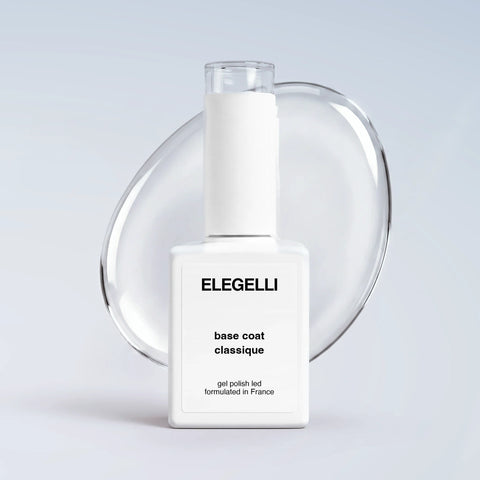
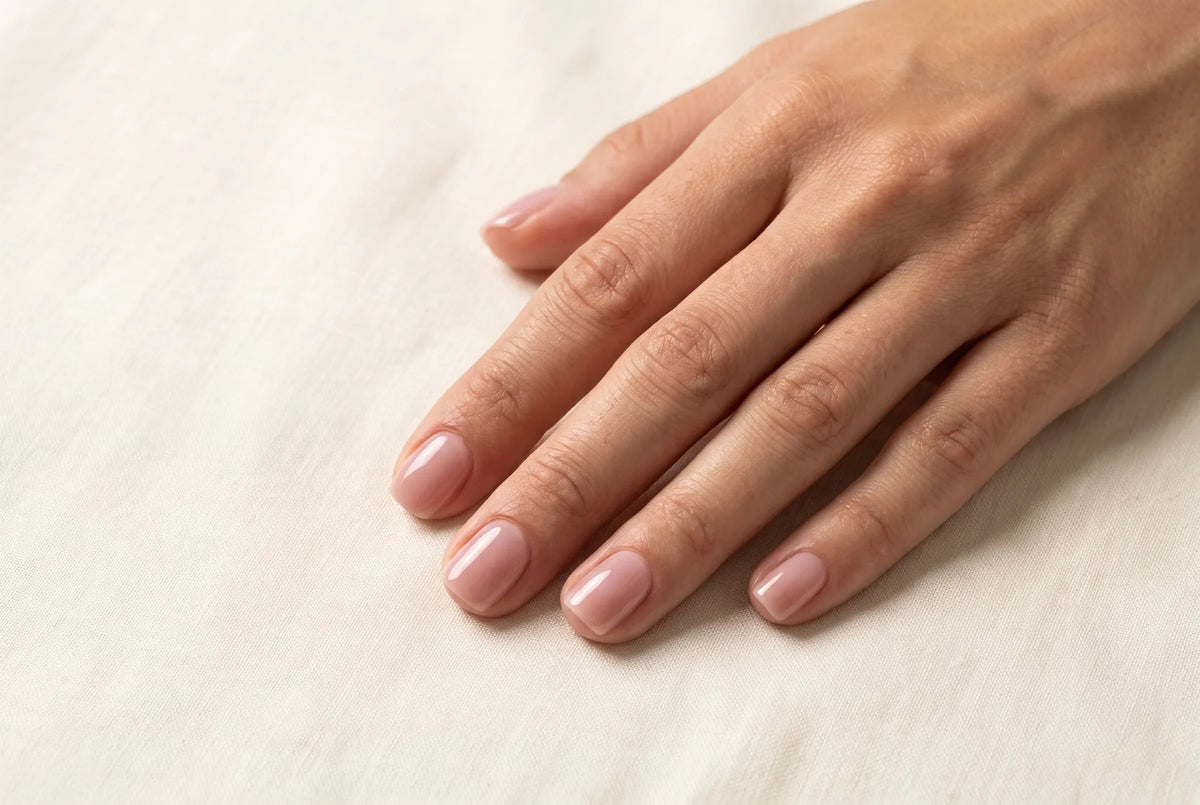
The answer is a margin: a hairline of bare nail at the cuticle and down both sides, as in the photo below. A base that levels on its own makes it easier to keep. Classic Base Coat levels flat without flooding the cuticles, so you can stop short of the skin and let it settle.

Gel that isn't fully cured still contains unreacted ingredients, which the skin can pick up during wear and when the gel is filed off. The usual causes are a lamp that doesn't suit the gel or has weakened with age, a curing time cut short and coats too thick for the light to reach the bottom, especially in dark, dense shades.
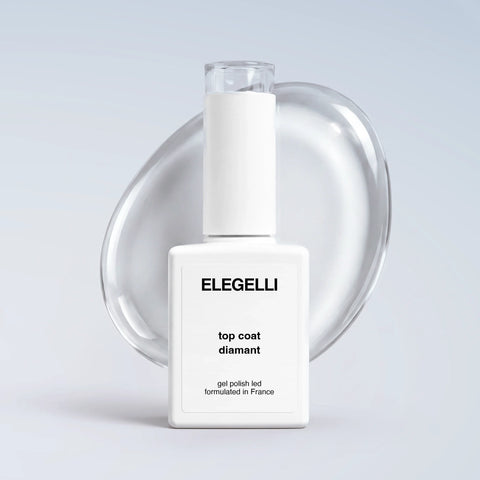
Wrinkles, dents, a layer that stays soft underneath and gel that smells strongly when filed are all signs of under-curing. So is a no-wipe top coat that stays tacky: Diamond Top Coat, for example, should cure to a hard, scratch-resistant shine with nothing to wipe off. Elegelli doesn't sell lamps, and our guide to UV and LED nail lamps explains how to choose one that suits your gel.
Filing creates fine dust that settles on the hands, wrists and face. If the gel wasn't fully cured, that dust carries uncured gel onto the skin. The same happens if you shape builder gel without first wiping off its sticky layer, which also clogs the file.
So file as little as you can. A soak-off base needs far less filing to remove: Classic Base Coat soaks off in 10 to 15 minutes. Sweep dust away with a clean, dry brush, never your hand, and don't blow on it.
Avoiding gel allergy comes down to two rules: keep uncured gel off the skin, and make sure every layer cures fully.
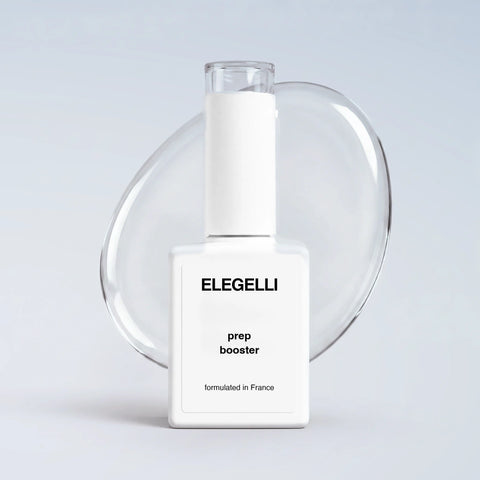
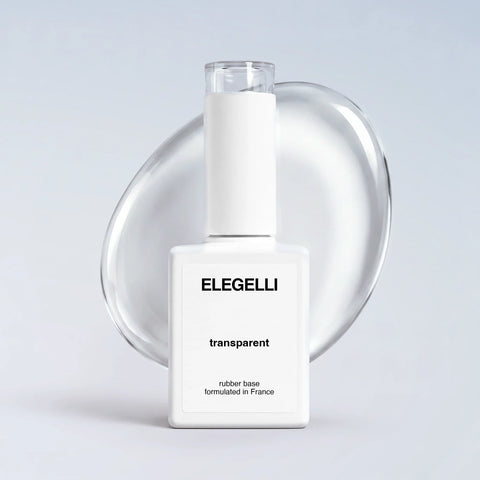
What we'd use: Prep Booster, Classic Base Coat (RB01 Transparent on soft or ridged nails), gel polish in thin coats and Diamond Top Coat. All are formulated without HEMA or TPO, and like any gel, they belong on the nail, never on the skin.

Technicians work with liquid gel all day, so they're far more exposed than their clients. Their allergy often starts on their own fingertips, as itchy or cracked skin that's easy to mistake for dryness.
Nitrile gloves are the usual recommendation, since latex and vinyl let acrylates through more easily. No glove keeps them out for long, though, so change gloves whenever gel gets on them and between clients. Dust extraction, closed bottles and a lidded bin for used wipes reduce contact further. The same precautions apply if you often do friends' nails at home.
If a client reacts, take off their gel, stop gel services for them and suggest they see a doctor. Note the products you used, as their dermatologist may ask.

Both labels are worth reading, but they answer different questions, and neither one means allergy-free. A label that says non-toxic tells you even less, and our guide to non-toxic gel polish explains what it really means and what to check instead.
HEMA is a small methacrylate that helps gel flow, wet the nail and grip, and it's one of the ingredients most often linked to gel allergy. Gels labelled HEMA-free leave it out, which takes one major allergen out of your manicure.
That doesn't make a gel allergy-free. HEMA-free gels still contain other (meth)acrylates, because those are what cure, and people already allergic to HEMA can react to related ones. If you've had a reaction, don't switch to a HEMA-free gel without your dermatologist's advice.
For the switch to count, change every layer: a HEMA-free colour over a base that contains HEMA brings it straight back next to the cuticle. Every Elegelli gel polish, base, top coat and rubber base is formulated without HEMA or TPO, and our builder gels have no HEMA in their ingredient list, including the layers you apply thickest, such as a B003 Milky White overlay or RB03 Cachemire worn alone as a sheer tint. Our labels still warn that they may cause an allergic reaction, as every gel's should. Our guides to HEMA-free gel polish and HEMA-free builder gel go through each layer.
Longer ingredient names that contain the letters HEMA, such as di-HEMA trimethylhexyl dicarbamate, belong to larger molecules from the same family, so they can appear in a gel labelled HEMA-free.

TPO (trimethylbenzoyl diphenylphosphine oxide) is a photoinitiator: an ingredient that reacts to the lamp's light and starts the curing. Since 1 September 2025, it has been banned in cosmetics in the European Union, gel polish included, after being classified as toxic to reproduction.
The ban isn't related to allergy, and a TPO-free gel still contains acrylates. As every gel sold in the EU now has to be TPO-free, the label mainly confirms that a product follows the rules; check older bottles and gels bought outside the EU. Our builder gels use a different photoinitiator, TMO. Our guide to TPO-free gel polish shows how to spot TPO on a label.
If a dermatologist confirms an acrylate allergy, you'll usually be advised to stop wearing gel. Switching products isn't a reliable fix, because builder gel, rubber base, acrylic nails, dip powders and nail glues all rely on related acrylates. That includes ours: HEMA-free or not, they are acrylate gels, and we'd rather you stopped than risked another reaction.
Ask your dermatologist what you can wear instead. Ordinary nail polish, which air-dries instead of curing under a lamp, may be an option. A Japanese manicure is another: a paste and a powder are buffed into bare nails for a natural shine, with no gel and no lamp. In both cases, check the ingredients against your patch test results.
Never apply gel to a nail or to your skin to see if you still react. Each exposure risks another reaction, and a home test can't show which ingredient is to blame.

The usual gel allergy symptoms are itching, redness, swelling or small blisters around the nails, appearing several hours to a few days after a manicure. Irritation and infection can look similar, so only a doctor can confirm an allergy, and patch testing identifies the exact ingredients.
An allergy builds up through repeated small exposures, such as gel on the cuticles, under-cured coats or filing dust, so it can appear after months or years of trouble-free gel. A new lamp, gel or technique can also leave layers under-cured without you noticing.
The allergy itself usually doesn't: once you're sensitised, you're likely to react whenever uncured gel touches your skin. The symptoms generally settle after the gel is removed and you stop using it, but see a doctor or dermatologist instead of waiting for them to pass.
No, it's a reaction to ingredients in the gel, not to the light. The lamp still matters, because one that is too weak or doesn't suit your gel leaves layers under-cured. If medication or a skin condition makes your skin sensitive to light, ask your doctor before using a nail lamp.
For a full manicure that keeps gel off the skin at every stage, follow our guide to applying gel polish at home. Every shade is in our gel polish, rubber base and builder gel collections.
Non-Toxic Gel Polish: What the Label Really Means and What to Check
11 min read
Plaid Nails: 11 Tartan, Gingham and Glen Check Ideas with Gel
11 min read
Coming of Age Day Nails: Gel Designs to Match a Furisode
11 min read

Best Base Coat for Gel Nails 2027: Our Pick and a 5-Brand Comparison
13 min read
Free delivery from 75 €
Shipped from Nice, France
Prepared in 1 to 2 business days
For orders placed before 2 pm, Paris time
14-day returns
From the day you receive your order
Secure payment
Encrypted checkout
Nail tech, salon or distributor? Join the Elegelli professional programme for pro pricing.