Guide

Gel Nail Extensions on Forms: How to Sculpt Them, Step by Step

No tip, no fixed shape: a length of gel sculpted over a simple form. How to fit the form, build the apex and avoid the mistakes that make extensions lift or break.
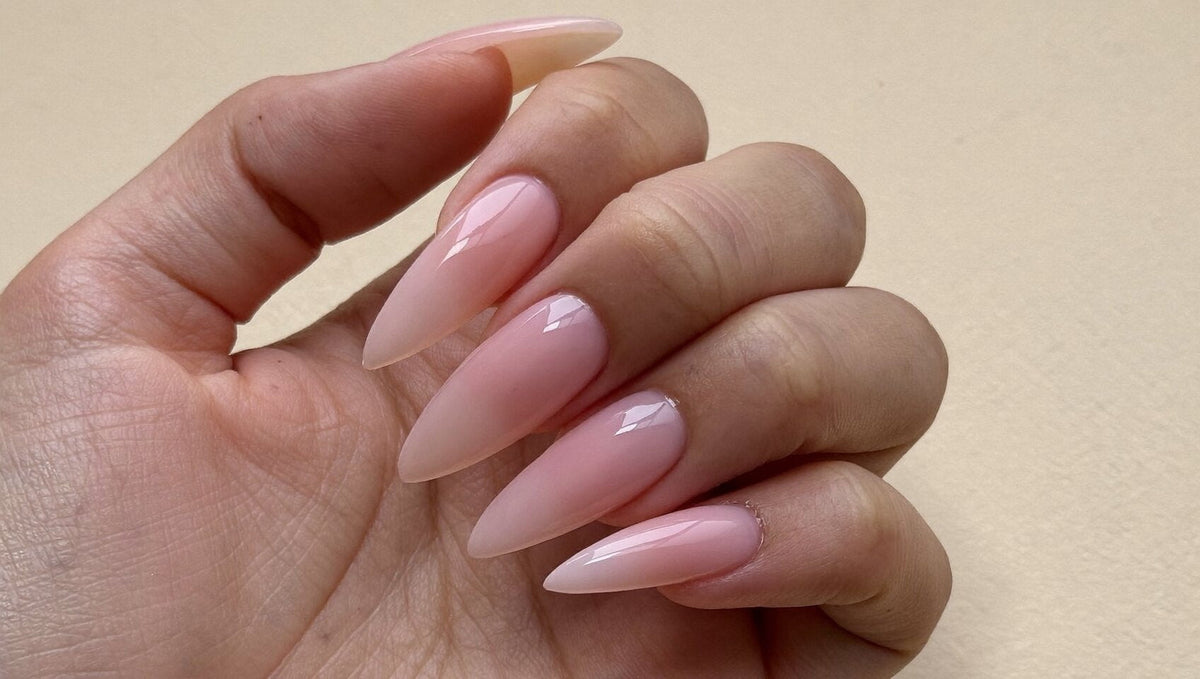
Hand with long almond nail extensions in a smooth, glossy milky pink builder gel on a warm cream background

There is a moment every nail technician remembers: the first time a length of gel, sculpted in the air over a simple paper form, turned into a nail that looked as if it had always been there. Extensions on forms are the purest skill of the craft. No pre-made tip, no fixed shape: the length, the curve and the silhouette are built by hand, for one client and one hand only.

The result is lighter and more natural than most tips, and it can be shaped into anything from a soft almond to a long ballerina. Here is how gel extensions on forms work, what you need, the professional method step by step, and the mistakes that make them lift or break.

What is a nail form?

A nail form is a flexible support, usually an adhesive paper sticker, that fits under the free edge of the natural nail. It creates a platform in line with the nail on which the extension is sculpted in builder gel. Once the gel is cured, the form is removed, leaving a new free edge made entirely of gel.

Most forms carry a printed guide that helps keep the length and the shape symmetrical. The real secret, though, is not the form itself but the way it is fitted.

Forms or tips?

  • Forms give a made-to-measure extension: the length, the shape and the curve follow the natural nail exactly. The result is light and natural-looking, and it adapts to every nail shape, even very curved or flat ones.
  • Tips are faster, because the shape is already made, but they impose their own curve and can feel thicker at the join.

Many technicians use both, but forms remain the reference for elegant, custom extensions, and the technique that shows real mastery.

Long almond extensions with a sheer nude base and crisp ivory French tips on ivory satin
Long almond extensions, sculpted to measure on forms.

What you need

How to do gel extensions on forms, step by step

  1. Prepare the natural nail. Push back the cuticles, remove the shine from the nail plate with a soft buffer and shorten the free edge to a thin, even line.
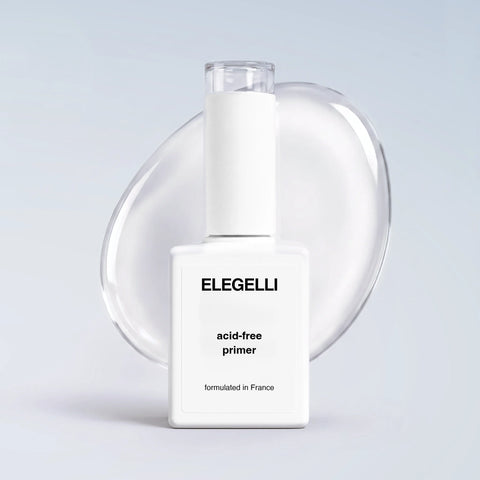
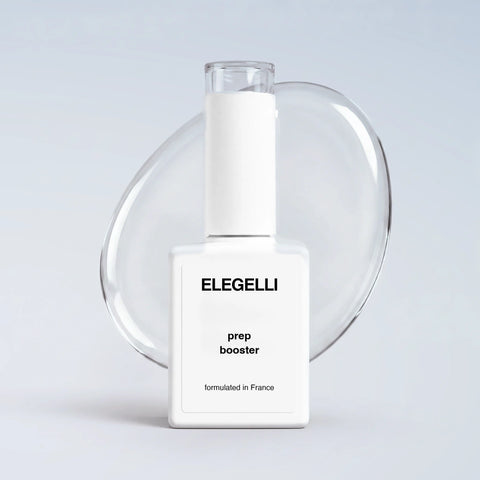
  2. Cleanse and prime. Wipe the nail with Prep Booster, then apply a thin coat of Acid-Free Primer.
  3. Fit the form. Slide the form under the free edge, with no gap between the nail and the form, and press it around the finger. Check from above and from the side: the form must continue the line of the nail, neither pointing up nor down. This is the most important step of all.
  4. Anchor with a thin layer. Work a very thin coat of builder gel into the natural nail and cure. It will anchor everything that follows.
  5. Sculpt the length. Place gel on the form and draw out the free edge to the desired length and shape, following the guide lines. Keep the free edge thin and even, then cure.
  6. Build the apex. Place a bead of gel in the centre of the nail and guide it towards the edges without touching the skin. Turn the hand upside down for a few seconds so the gel settles into a soft curve, then cure.
  7. Remove the form and refine. Peel off the form, remove the sticky layer if there is one, and file the shape: sidewalls straight, free edge symmetrical, surface smooth.
  8. Finish. Add your colour if you wish, then seal with Diamond Top Coat and cure.

An electric file makes refining faster and more precise; our guide to choosing a nail drill explains what to look for. For everything about working with builder gel itself, from the slip layer to self-levelling, see our builder gel guide.

Jar of Elegelli B025 Poussière de Diamant builder gel
B025 Poussière de Diamant, a clear builder gel with a subtle shimmer.

Length and shape

The most elegant extensions are rarely the longest. A length of a third to a half of the nail bed looks natural and wears well in everyday life. Almond and oval shapes are the most forgiving and flatter almost every hand; square and ballerina shapes need perfectly straight sidewalls, and a little more experience.

The mistakes that make extensions lift or break

  • A gap under the form. Gel runs into it and creates a weak point under the free edge: the extension will crack there.
  • A crooked form. A form that points up or down produces an extension that looks bent from the side.
  • A free edge that is too thick. It looks heavy and artificial. Keep the tip thin and put the strength in the apex.
  • No apex. Without a point of strength at the stress area, even a perfect-looking extension breaks at the first knock.
  • Gel on the skin. The first cause of lifting at the cuticle. Leave a hairline gap and clean up before curing.

Infills and care

As the natural nail grows, the apex moves forward and the extension becomes unbalanced. An infill every three to four weeks rebalances the structure: file down the old gel, leave a thin layer in place and rebuild the apex with fresh gel. Between appointments, a drop of cuticle oil every evening keeps the skin and the nail supple, and gloves protect the extensions during household chores.

Read next: Builder gel fill and Builder gel vs acrylic.

Frequently asked questions

What is the difference between forms and tips?

Forms are a support on which the extension is sculpted to measure; tips are pre-shaped false nails glued to the natural nail. Forms give a lighter, more natural result.

How long do gel extensions on forms last?

With good prep and an infill every three to four weeks, they can be worn continuously.

Can I do extensions on short or bitten nails?

Yes, forms are well suited to short nails, as long as they fit closely under the free edge. Very bitten nails need a little growth first.

Which builder gel for extensions?

A builder gel with a thick, self-levelling consistency. Choose clear to show the natural nail, milky for a soft finish, or a tinted nude to even out the nail bed.

Do gel extensions damage natural nails?

Not when they are applied and removed properly: careful prep, no gel on the skin, and removal by filing, never by peeling.

Discover all our shades in the builder gel range.
Keep reading

A hand with short squarish nails in glossy deep red, the thumb and ring finger nails with a red tartan of black bands and fine black and white lines, on warm ivory paper

Plaid Nails: 11 Tartan, Gingham and Glen Check Ideas with Gel

How to paint tartan, gingham and glen check in gel, one cured direction at a time, with 11 ideas for autumn, winter and summer, accent nails and French tips, with the gel shades named.
An adult hand with medium almond nails in glossy deep red, the ring finger nail clear with small gold flecks sealed under glossy gel, resting on folded red satin on warm ivory paper

Coming of Age Day Nails: Gel Designs to Match a Furisode

Thirteen gel designs matched to the colour of the furisode, with the shades to use, a gold leaf method that keeps the sleeve from catching, and a timing plan for the photo shoot and the ceremony.
Two hands with short natural nails in a sheer milky pink rubber base worn alone, on ivory paper

Best Base Coat for Gel Nails 2027: Our Pick and a 5-Brand Comparison

Here is why the best base coat for gel nails is Elegelli's, with the comparison against DND, Kiara Sky, OPI and Victoria Vynn.
Hands applying milky pink builder gel to a natural nail at home, a white LED nail lamp behind

Builder Gel Kit for Beginners: What You Need for Builder Gel Nails …

Everything a first builder gel kit needs, from the lamp to the top coat, what you can leave out, and what to expect from your first sets at home.
  • Free delivery from 570 kr

    Shipped from Nice, France

  • Prepared in 1 to 2 business days

    For orders placed before 2 pm, Paris time

  • 14-day returns

    From the day you receive your order

  • Secure payment

    Encrypted checkout

Shipping policy

Pro pricing for salons and nail techs

Nail tech, salon or distributor? Join the Elegelli professional programme for pro pricing.
Apply for pro pricing
Leave a comment

This site is protected by hCaptcha and the hCaptcha Privacy Policy and Terms of Service apply.