


HEMA-Free Builder Gel: How to Choose One for Natural Nails and Extensions
HEMA-free builder gel takes one major allergen out of your routine, but it is no guarantee against allergy. Learn what to check on the label and which shade suits each client.
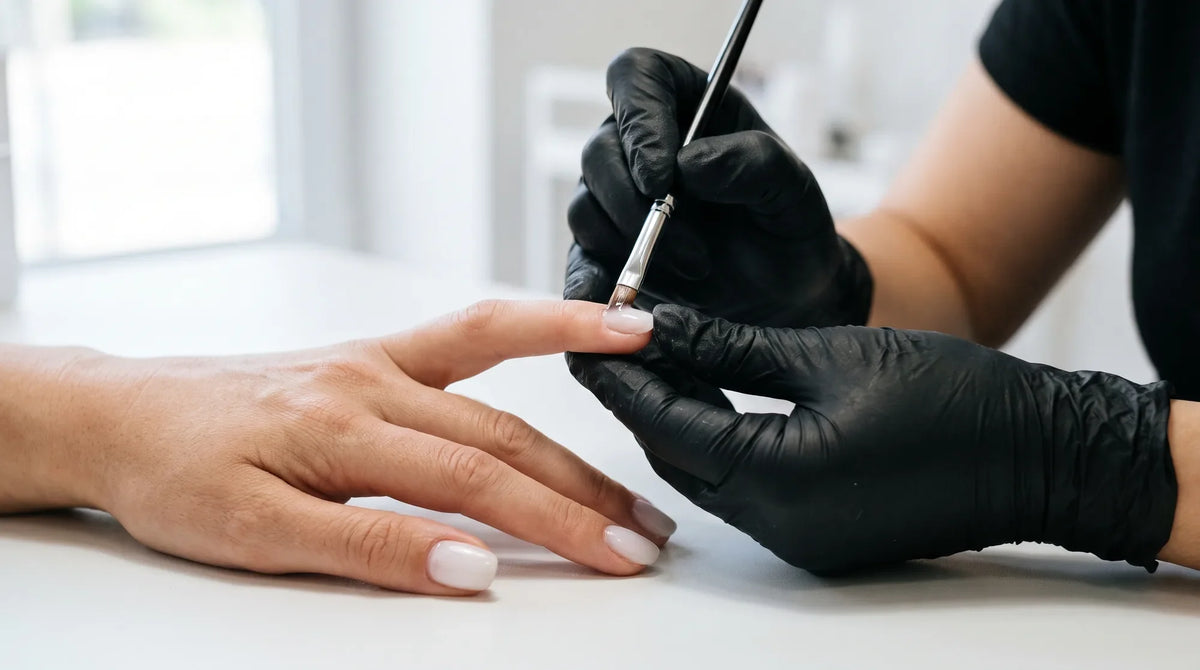

A HEMA-free builder gel is the sensible choice if you wear builder for months or apply it to clients every day. It takes one major allergen out of the gel you apply most thickly. When you buy, check the ingredients for HEMA and TPO, make sure the gel cures fully in your lamp, and pick a self-levelling formula in an airtight container.
Elegelli builder gels have no HEMA in their ingredient list, use TMO in place of TPO and are made in France. Milky shades suit short overlays on natural nails, nudes keep regrowth discreet, and both work for extensions. Below, we explain why builder gel needs extra care and what HEMA-free does not promise.
Yes. Builder gel contains acrylates, and anyone can become allergic to them through repeated skin contact. The allergy usually builds up over time, so a client can wear the same gel for months before she reacts. Four things raise exposure compared with gel polish.
Whatever the formula, clean any gel off the skin before curing, give every layer its full time under the lamp, and remove a sticky layer with a lint-free wipe, never a bare finger. Brush dust away without blowing on it, and consider nitrile gloves if you do nails daily.
If you or a client notice redness, itching, swelling or blisters around the nails, stop using the product and see a doctor or dermatologist. Our guide to gel nail allergy describes the signs.
It reduces the risk without removing it. HEMA (hydroxyethyl methacrylate) is a small monomer and one of the best-known causes of gel allergy. HEMA-free builders still contain other acrylates, which is why labels, ours included, warn that they may cause an allergic reaction.
That matters most for a client who has already reacted, because she may react to other acrylates too and no builder gel comes with a guarantee. She should see a doctor or dermatologist before having more gel, ideally with the ingredient lists of the products used on her.
Names can mislead: di-HEMA trimethylhexyl dicarbamate, for example, is a different molecule from HEMA, and brands treat it differently in their claims. Anyone told to avoid a specific ingredient should look for its exact name in the full ingredient list (INCI).
HEMA is a monomer, one of the building blocks that form hard gel. TPO (trimethylbenzoyl diphenylphosphine oxide) is a photoinitiator: it reacts to the lamp's light and starts the cure. So HEMA-free addresses a well-known allergen, while TPO-free concerns an ingredient banned from cosmetics in the EU since 1 September 2025.
A HEMA and TPO-free builder gel covers both. Elegelli builder gels list no HEMA and use TMO, a different photoinitiator from TPO. When buying outside the EU, or using up older pots, check the label for TPO.
Beyond HEMA and TPO, look at how the gel cures, levels and keeps in its container. A gel that does all three well needs less filing, so it makes less dust.
| What to check | What to look for |
|---|---|
| HEMA | No hydroxyethyl methacrylate in the ingredients |
| TPO | No trimethylbenzoyl diphenylphosphine oxide |
| Curing time | Stated for both LED and UV |
| Consistency | Self-levelling, so it needs little filing |
| Container | Airtight, so the gel stays fluid |
| Notification | CPNP (EU) or SCPN (UK); ours are on both |
A thick layer under a weak lamp can feel hard on top and stay soft underneath, so use the curing time for your type of lamp. Our builder gels need 60 seconds under LED or 120 seconds under UV for each layer. Gel that clogs the file, smells strongly when filed or dents easily is probably under-cured.
We don't sell lamps, so choose one that cures both UV and LED gels, has a 60-second setting and lights all four fingers evenly. Cure thumbs on their own so they lie flat. Heat matters too: a gel that heats up sharply makes clients pull their hand out before the layer has cured. Elegelli builder gels cure without a heat spike, and with any gel, thinner layers stay cooler.
A self-levelling builder settles into a smooth surface by itself, so there is little to file after curing. That matters on natural nails, where heavy filing thins the plate. Overload it, though, and it runs towards the cuticle and sidewalls, so place a bead in the centre, guide it with light strokes and leave a tiny gap at the skin. Our step-by-step guide to using builder gel sets out the full routine.
Builder gel in a bottle brushes straight on, which is quick for short overlays, while a jar gives more control for extensions and apex work. Ours come in a 30 mL airtight jar that works with compressed air: press it to dispense a dose onto a palette, or unscrew it to use a brush. Either way, the gel does not thicken in the jar.
Yes, if the gel is well formulated and applied with care, since strength comes from the whole formula and from even curing. HEMA is often used to help gel grip the nail, though, so a HEMA-free builder rewards thorough prep: push back the cuticle and remove it from the nail plate, lightly buff off the shine, then cleanse and dehydrate.

Prep Booster dries in seconds and takes oil and moisture off the nail plate without leaving it dry, white or brittle. On oily nails or nails that tend to lift, add Acid-Free Nail Primer, which air-dries in under a minute without burning or stinging. Applied correctly, our builder gels are made to wear 28 days and more without lifting. If yours lift sooner, see our guide to why builder gel lifts.
All our builder gels share the same properties, so the choice comes down to shade.
A thin milky overlay strengthens short natural nails and evens out small marks on the nail plate. Start with B003 Milky White and keep the apex low: milky shades reveal thickness, so an uneven layer or a high apex shows up as a whiter patch in the centre. For a pinker result, B006 Magnolia is a delicate light pink that suits the office and clients who want their nails to pass as their own.
Nude builders add colour and strength in one step; choose them by undertone, as you would a nude polish. Fair skin, cool undertones and silver jewellery all suit B009 Rose Ballerine, a fresh ballerina pink. On medium, olive and warm skin, pinks can turn slightly grey, so the warm beige of B010 Beige Trench is the better match.
For a white finish, choose between B027 Blanc Meije, a frosted white, and B011 Crème d'Ivoire, an ivory cream that is warmer and less stark on tanned skin. Whites are the hardest shades to apply evenly, so build thin layers and check the nail from the side before each cure. Finish with Diamond Top Coat, a no-wipe top coat that does not yellow over whites and keeps its mirror shine to fill day, about three weeks.
On forms or tips, Rose Ballerine or Beige Trench keeps a long nail close to the colour of the nail bed, and Milky White gives a whiter finish. Build length with two or three small beads, turn the hand palm-up briefly so the gel settles into a curve, and cure each section before it drifts. Place the apex over the stress area, where the nail leaves the finger: our gels are made to hold there without cracking. Applied in small beads, they do not flood, though long sculpted lengths are harder to master.
Home users who already do their own gel polish can start with the Milky White Finish Kit, which pairs B003 Milky White with Diamond Top Coat. You will still need prep products, a base, a file and a UV or LED lamp. Builder gel takes more practice than gel polish, so begin with short overlays before trying extensions.
For a client who has never reacted but wants less exposure, keep every layer HEMA-free, since a HEMA-free builder over a base containing HEMA still puts HEMA on the nail. Prep Booster contains no HEMA and no TPO, while Classic Base Coat and Diamond Top Coat are both HEMA-free and TPO-free. Our guide to choosing a base coat for builder gel covers the pairing in detail.
Elegelli builder gels are removed by filing. For an infill, file the old product back to a thin, even layer, lightly buff the regrowth, then rebalance with fresh builder and bring the apex back over the stress area. Our builder gel infill guide covers each step.

For a full removal, file off most of the builder, then take the last layer down with a fine hand file, touching the natural nail only lightly. A drill takes some learning, but it saves time for technicians doing several infills a day.
The Elegelli professional cordless nail drill is light and quiet, reaches up to 45,000 RPM with 4.8 Ncm of torque, takes standard 2.35 mm bits and has a handpiece that stays cool. Keep the bit moving and the pressure light, because heat comes from pressing or staying in one spot, and use dust extraction.
Yes. Elegelli builder gels list no HEMA in their ingredients and use TMO in place of TPO. For any brand, check the ingredient list for hydroxyethyl methacrylate.
For clients who have never reacted, use a HEMA-free and TPO-free builder with a matching base and top coat, and keep every layer off the skin. Anyone who has already reacted should see a doctor or dermatologist first.
Largely, yes. "Hard gel" usually means a builder that is filed off and cannot be soaked, which is how ours are removed. Some builders are sold as soak-off, so check the label.
Applied correctly, Elegelli builder gels are made to last 28 days and more without lifting. Infills are usually booked every three to four weeks, as the nail grows and the apex moves forward.
Every shade is in our builder gel collection, with the bases and top coats to go with them in our base coat and top coat ranges.
Nails for Men: The Men's Manicure, Step by Step
10 min read
French Tip Toes: How to Do a French Pedicure with Gel, Plus 10 Ideas
11 min read
Carnival Nails: 14 Bright Ideas with Glitter, Colour and Shine
12 min read
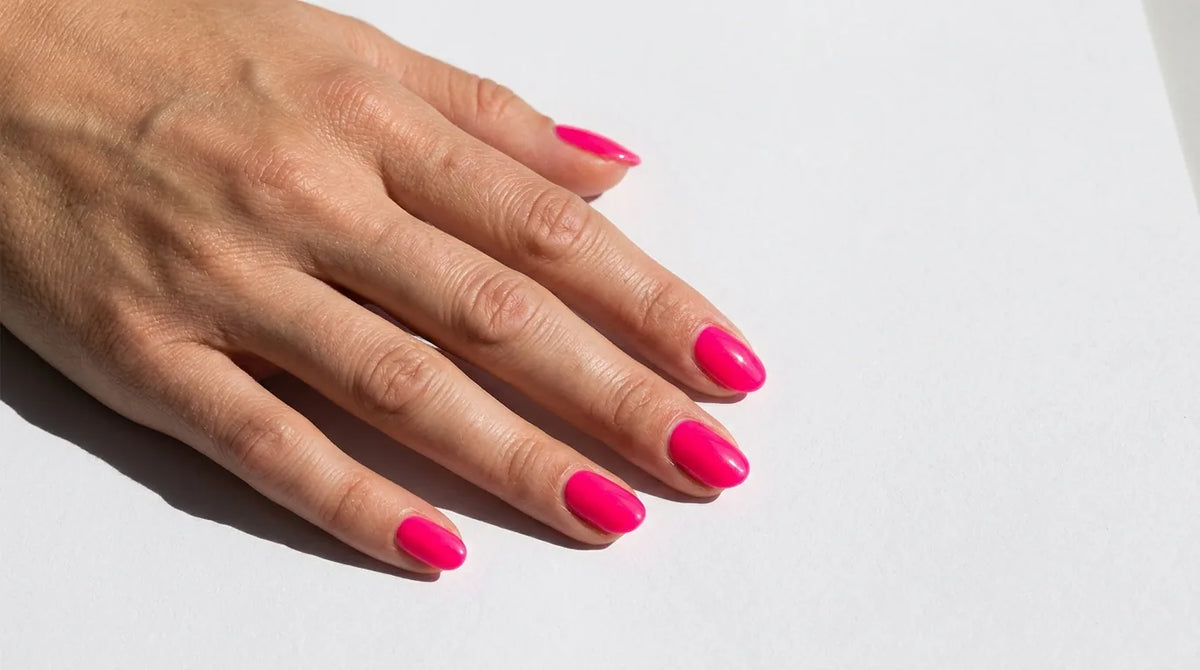
Neon Nails: 12 Bright Ideas and How to Make Neon Colours Pop
11 min read
Free delivery from $280.000
Shipped from Nice, France
Prepared in 1 to 2 business days
For orders placed before 2 pm, Paris time
14-day returns
From the day you receive your order
Secure payment
Encrypted checkout
Nail tech, salon or distributor? Join the Elegelli professional programme for pro pricing.


