


Matte Nails: How to Get a Matte Finish with Gel, Plus 14 Matte Nail Ideas
Any gel colour can be made matte with one top coat. Learn how to apply it, keep it from going shiny, and try 14 matte nail ideas, from bordeaux to velvet cat eye.
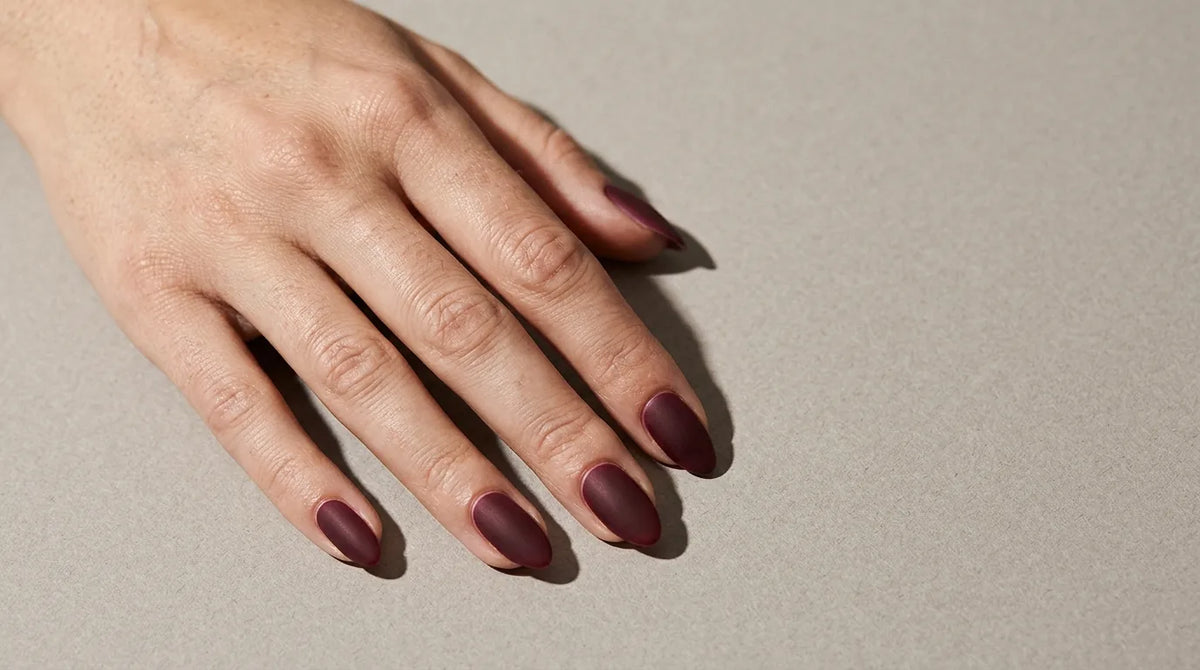

Matte nails are gel nails finished with a matte top coat in place of a glossy one, so the colour loses its shine and turns velvety and slightly deeper. Any gel colour can be made matte with a single top coat.
This guide explains how to apply a matte gel top coat, why it sometimes goes shiny and which colours suit it, then gives 14 matte nail ideas with their steps.
The finish comes from the top coat alone. Any cured gel polish, coloured builder gel or cat eye can be made matte, because the top coat changes only the way the surface reflects light, not the shade.
Our Matte Top Coat gives a velvet matte finish that stays matte until fill day. It is streak-free in one coat and resists grease marks and stains. As a no-wipe formula, it leaves no sticky layer to remove after curing.
The matte top coat replaces the glossy one as the last layer, over the cured colour.
A thin, even coat cures fully and gives an even matte surface, while a heavy one can pool at the sidewalls and wrinkle in the lamp. Our guide to gel base coat and top coat explains what each layer does.
Shiny patches appear when something leaves a film on the surface. Hand cream, cuticle oil and the natural oils of the skin fill the fine texture that makes the nail matte. Friction from typing or reaching into pockets then polishes the tips and sides, so that is where the shine usually shows first.
To bring the finish back, wash your hands with soap and warm water, or wipe the nails with a lint-free pad and a little alcohol. Our Matte Top Coat resists grease marks and stains. When you use cuticle oil, work it into the skin around the nail and wipe the nail plate afterwards.
Gloss reflects light, so a shade appears brighter and its surface seems wet. Matte scatters light, so the colour reads deeper and more muted, closer to velvet or suede.
Matte is a good choice for dark colours, for winter with wool and heavy coats, and for a discreet office manicure. Gloss is easier if you apply hand cream many times a day, work with oils, or want a pale shade to stay fresh. You can also mix both on one hand.

Dark, saturated shades are the safest choice: bordeaux, forest green, sapphire, cocoa and plum all gain depth under a matte top coat. For a lighter take on plum, try 105 Sloe, a soft plum-pink. Greys and taupes come next, as their muted tones already suit a finish without shine. Pale nudes, pastels and whites can work too, but they show oil marks and friction shine sooner and need more frequent wiping.
Short nails are the easiest to keep matte, as the small surface gives shine fewer places to build up. Long almond or coffin nails rub against more things, so their free edge goes shiny first: wipe the tips with alcohol every few days.
Under a matte finish, deep bordeaux changes from glossy wine to dark velvet, a strong choice for winter evenings. For natural nails that need strength, use B014 Amarante, a deep bordeaux builder gel that gives colour and structure in one step. Apply a thin first layer, then a second to build the apex, curing each for 60 seconds under LED or 120 seconds under UV. Seal with Matte Top Coat. See our burgundy nail ideas for more designs.
046 Fir Tree is a deep forest green that turns soft and dense once matte. It flatters warm and olive skin tones and sits well with gold jewellery. One coat usually covers. If the colour looks thin near the cuticle, add a second thin coat, as a single thick coat may not cure through. Finish with Matte Top Coat.
Matte blue is a strong alternative to black or bordeaux. 113 Sapphire is a deep, bold blue that turns even and quiet under a matte top coat. It flatters cool skin tones and silver jewellery, and on short square nails it is tidy enough for the office. Apply one coat, check the sidewalls for thin spots, cure and seal with Matte Top Coat.

Matte 009 Cocoa, a deep brown, comes close to suede. It goes with camel coats and leather boots, and flatters most skin tones, tanned skin especially. Apply one or two thin coats, curing each, and finish with Matte Top Coat. Brown shows fewer marks than beige, which makes it a good first matte manicure if you use hand cream often.
Matte black is the most graphic dark finish and works on short nails and long coffin or stiletto shapes alike. Use 001 Black, a deep black gel polish, in two thin coats. Black pigment blocks light, so a thick coat can stay soft underneath and wrinkle. Cure each coat fully before the matte top coat. Our black nail designs adapt well to a matte finish.
015 Taupe sits between grey and beige, so it goes with most office wardrobes, from navy suits to white shirts. Under a matte top coat its surface turns dry and even. It suits anyone who wants a neutral a little darker than a nude, and one thin coat usually covers. Cure it under your lamp, then seal with Matte Top Coat.
007 Granite is an earthy grey with some warmth in it, so it avoids the steely effect some greys have on pale skin. When matte, it recalls stone or felt and pairs naturally with winter knitwear. Short rounded nails suit it best for everyday wear, as they have no corners to catch and turn shiny. Apply one or two thin coats, cure each, then add Matte Top Coat.

A matte nude is quiet and polished, good for a job interview or a wedding guest. 075 Beige is a soft natural beige that suits fair to medium skin tones. Pale shades streak when the coat is thin in one place and thick in another, so apply two thin, even coats and cure each. Matte Top Coat is streak-free in one coat, which matters most on a light colour. To match a nude to your skin tone, see our nude nails guide.
107 Lavender is a soft lavender purple that turns powdery under a matte top coat, a fresh choice for spring. It suits cool skin tones and light spring clothes. Pastels are hard to apply evenly, so use two thin coats, keep the brush almost flat and let each coat settle for a few seconds before curing, then finish with Matte Top Coat.
188 Sage is a deep sage green, muted enough to wear as a neutral. A matte finish brings out the grey in the green, so it sits easily with linen and natural fabrics. Brush on one thin coat, add a second if the colour looks patchy, and cure each before the Matte Top Coat. For a two-tone set, alternate matte sage and taupe nails on each hand.
This tone-on-tone French uses one colour and two finishes, so the tip shows only when light catches it. Apply 075 Beige in two thin coats and cure, then cover the whole nail with Matte Top Coat and cure. With a fine liner brush, draw a smile line in Diamond Top Coat and fill the tip in front of it, cap the free edge and cure. The design suits almond and oval nails of medium length.

Small glossy drops on matte cocoa brown look like drops of water. Apply 009 Cocoa and Matte Top Coat, curing each. With a dotting tool, place three to five small beads of Diamond Top Coat on each nail, away from the cuticle and the free edge, and cure straight away so the drops do not spread. For a taller drop, add a second small bead on top of the cured one and cure again. Practise on a spare tip first. For lines, pull one stroke from just above the cuticle to the tip with a fine liner brush, then cure.

A cat eye under a matte top coat keeps its band of light, but the shine softens into a diffused glow similar to crushed velvet. Cat Eye 005 Dark Aurora, a deep chocolate shimmer with a flash of light, turns warm and smoky this way. Apply one thin coat over the cured base, hold a magnet over the uncured layer for a few seconds to draw the beam, then cure straight away. Any standard nail magnet works. Seal with Matte Top Coat. Our cat eye nails guide explains where to hold the magnet for each effect.
One colour, matte on one hand and glossy on the other, is the easiest way to test the finish. Apply base and any colour from this list on all ten nails, then seal one hand with Matte Top Coat and the other with Diamond Top Coat, and cure. After a week of daily wear, you will know which finish suits your hands and your routine.
To switch back to gloss, wash your hands or wipe the nails with alcohol, then apply one coat of a glossy no-wipe top coat such as Diamond Top Coat over the cured matte layer, cap the free edge and cure. Or choose gloss at your next appointment or infill. Our guide to the best gel top coat compares the options.
Matte nails come off like any other gel manicure. Gently file the top layer to break the seal, then soak off the gel polish or file it away. Builder gel such as B014 Amarante is always filed, never soaked. Never pick or peel the gel, as it takes layers of the natural nail with it.
Apply a matte gel top coat in one even coat as the last layer over your cured colour, cap the free edge and cure. The colour underneath can be any gel polish, builder gel or cat eye.
Yes, with a little care. Our Matte Top Coat stays matte until fill day. Hand cream, oils and friction can leave shiny patches, which soap or a wipe of alcohol removes.
The shine usually comes from hand cream, oils or friction, which washing or wiping removes. A patch that was shiny from the start was missed by the top coat: add a thin coat and cure.
Dark, saturated shades such as bordeaux, forest green, sapphire, cocoa and plum gain the most, followed by greys and taupes. Pale shades show marks sooner.
Yes. A matte gel top coat changes only the finish, so it can seal any cured gel colour, including builder gel and cat eye. Cure it for the time in its instructions.
Yes. Cleanse the matte layer with alcohol, then apply a glossy no-wipe top coat, cap the free edge and cure: the nail is glossy again. You can also apply it to part of the nail only, for a glossy tip, drops or lines.
Build your next matte set with our gel polish, builder gel and cat eye collections.
Nails for Men: The Men's Manicure, Step by Step
10 min read
French Tip Toes: How to Do a French Pedicure with Gel, Plus 10 Ideas
11 min read
Carnival Nails: 14 Bright Ideas with Glitter, Colour and Shine
12 min read
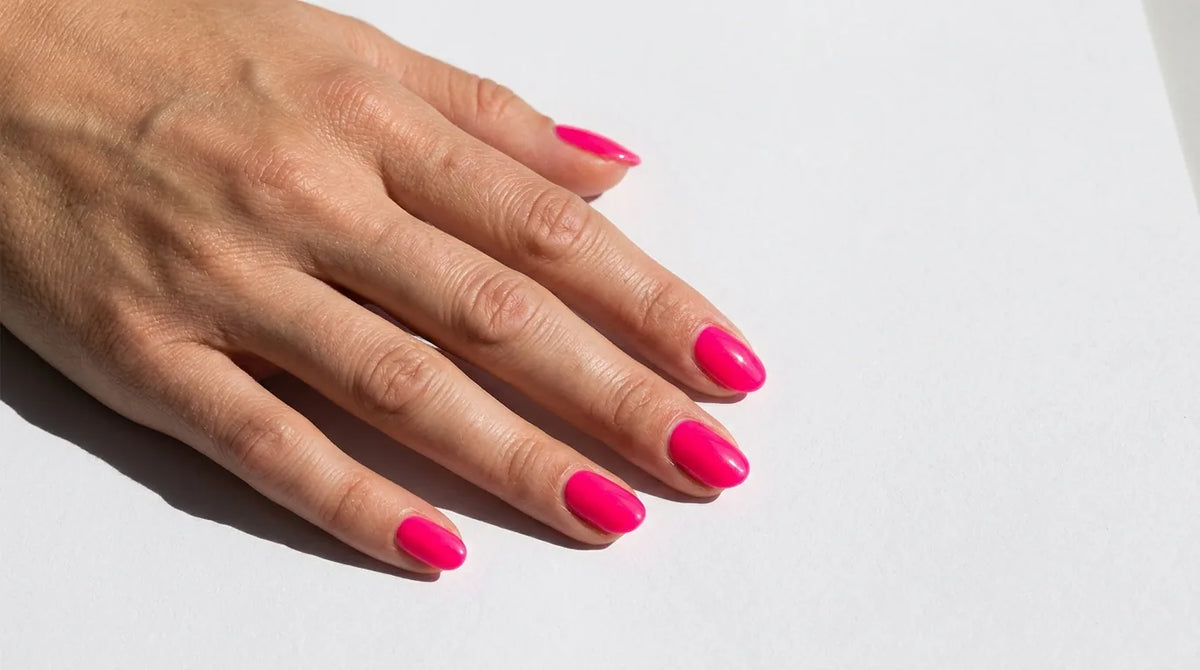
Neon Nails: 12 Bright Ideas and How to Make Neon Colours Pop
11 min read
Free delivery from 850 kr
Shipped from Nice, France
Prepared in 1 to 2 business days
For orders placed before 2 pm, Paris time
14-day returns
From the day you receive your order
Secure payment
Encrypted checkout
Nail tech, salon or distributor? Join the Elegelli professional programme for pro pricing.


