


Gel Polish vs Regular Polish: The Differences and Which to Choose
Gel lasts weeks, regular polish wipes off in a minute. An honest comparison of wear, removal, nail health, allergy and cost, including when regular polish is the better buy.
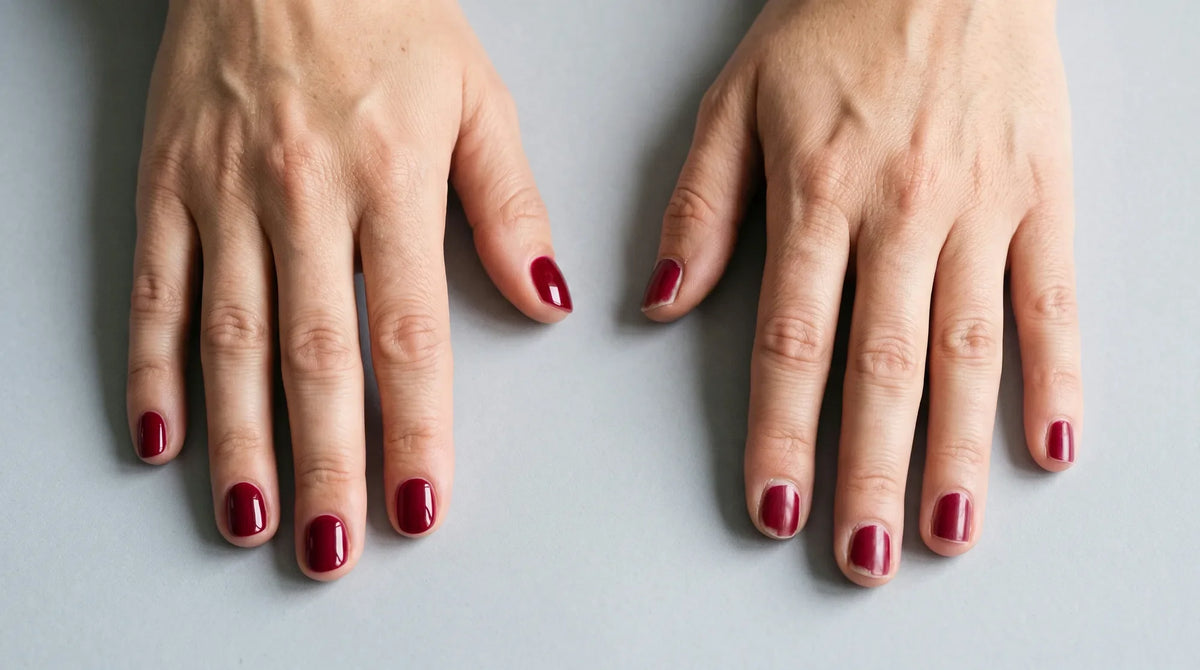

The main difference in gel polish vs regular polish is how each one hardens. Gel is cured under a UV/LED lamp and lasts two to three weeks, while regular polish dries in the air, usually lasts a few days to a week and wipes off in a minute. Choose gel for nails that stay done for weeks, and regular polish if you change colour every few days or have no lamp.
This comparison covers wear, removal, nail health, allergy, pedicures and cost, and says plainly when lacquer, which we don't sell, is the better buy.
Regular polish, also called normal nail polish, lacquer or varnish, is made of resins dissolved in solvents. As the solvents evaporate, they leave a thin coloured film that is touch-dry within minutes but stays soft underneath for several hours, which is why a fresh manicure can pick up marks from the bed sheets that night.
Gel polish is based on acrylates and a photoinitiator, an ingredient that reacts to light, so it stays wet in the air until the UV or LED light of a nail lamp hardens it. Each layer (base, colour, then top coat) is cured in turn, and the nails are hard as soon as the last one comes out of the lamp.
| Criterion | Gel polish | Regular polish |
|---|---|---|
| How it hardens | Cured under a UV/LED lamp | Dries in the air |
| Ready to use | As soon as the top coat is cured | Fully hard after several hours |
| Wear on fingernails | Two to three weeks | A few days to a week |
| Removal | Soaked off in acetone or filed off | Wiped off in a minute or two |
| Shine | Glassy until removal | Glossy at first, dulls within days |
| Learning curve | A few manicures to master | Easy to paint, easy to smudge |
| Best for | Weeks of wear, holidays, busy hands | Frequent colour changes, one event, nails recovering |
Regular polish is a thin film resting on the nail, and typing, washing up and opening parcels wear it away at the free edge until it chips. A base coat, thin coats, a capped free edge and a fresh layer of top coat every two or three days help it last up to a week.

A well-applied gel set often grows out before it chips. Cured gel resists water and detergents, and a gel base grips a properly prepared nail far more firmly than lacquer can. Applied over a base coat and under a top coat, our gel polish lasts up to three weeks without chipping or lifting.
Shine follows the same pattern: fresh lacquer can be very glossy under a good top coat but dulls within a few days, while cured gel stays glassy until removal.
A regular manicure is quick to learn and needs only the bottles: a base coat, two thin coats of colour and a top coat.
Gel takes longer, because it only lasts on a clean, dry nail. Push back the cuticle and remove it from the nail plate, lightly buff away the shine, cleanse and dehydrate, then apply and cure each layer for the time given in the instructions. Thin coats, a capped free edge and a clean line away from the skin take a few manicures to master, and our guide to applying gel polish at home goes through each step.
Removal is where regular polish clearly wins, as a pad of remover takes it off in a minute or two. Soak-off gel takes longer: once the shine of the top coat is filed off, each nail sits wrapped in an acetone-soaked pad for the time in the instructions before the softened gel is pushed gently away.
Gel can also be filed off, but it should never be peeled or prised away. Our guide to removing gel polish at home covers both methods.
Gel polish does not damage nails by itself when it is applied and removed correctly. The damage comes from heavy buffing, thick layers that lift and get picked at, and above all peeling or forcing gel off, which strips the top layers of the nail plate and leaves nails thin and bendy.
Regular polish is the gentler of the two to remove, since it needs no filing or long soak. Dark lacquer worn without a base coat can stain nails yellow, though, and frequent use of remover dries nails and cuticles, as a gel soak-off does. Nails don't need to breathe between gel sets, because the nail plate is not living tissue; a pause simply lets damaged layers grow out.
With gel, allergy comes mainly from uncured gel touching the skin, often through flooded cuticles or layers left under-cured by a thick coat or a cure cut short. An acrylate allergy, once it develops, tends to last, so keep gel off the skin, wipe away any that strays before curing, and cure each thin coat for the full time in the instructions.
HEMA-free gel polish leaves out one major allergen, but it still contains other acrylates, so it does not remove the risk of allergy. Our gel polish, top coats and rubber bases are formulated without HEMA and TPO, and their labels still warn that they may cause an allergic reaction.
Regular polish involves no curing, so there is no uncured layer to worry about. Whatever you wear, redness, itching, swelling or blisters around the nails mean you should stop using the product and see a doctor or dermatologist. Our article on gel nail allergy explains the signs.
Toenails grow more slowly than fingernails and take fewer knocks, so regular polish lasts much longer on the feet than on the hands. Its weak point is drying time: socks, tights and closed shoes can mark it for hours.
A gel pedicure lasts longer still, until regrowth shows or you want a new colour, and shoes can go on as soon as the last coat is cured. Removal is the drawback, as soaking toenails is fiddly, and curing needs a lamp with a removable base or one wide enough for the foot.

With either polish, see a doctor about any toenail that is thickened, crumbly, discoloured or lifting instead of covering it with colour.
For all its staying power, gel is the wrong buy in a few cases.
Besides a UV/LED lamp, a home gel manicure needs a file, a buffer, a cuticle pusher, lint-free wipes, acetone and foil or clips, plus a base coat, a colour and a top coat. We don't sell lamps or regular polish. Choose a lamp with a timer and room for your thumb to lie flat; our comparison of UV and LED nail lamps explains the difference.
Buying all this makes gel more expensive to start with than regular polish, which needs only a bottle and remover. The lamp and tools are bought once, though, and thin coats make a gel bottle last many manicures.
The simplest start is the Gel Polish Discovery Kit, with Classic Base Coat, the fresh, vibrant 019 Hibiscus and Diamond Top Coat. For oily nails or gel that has lifted before, the Deluxe Manicure Pro Kit adds Prep Booster, a nail dehydrator, and Acid-Free Nail Primer. Neither kit includes a lamp, and both are in our starter kits.
Classic Base Coat holds for up to 21 days and soaks off in 10 to 15 minutes, while Diamond Top Coat leaves no sticky layer and keeps a mirror shine for about three weeks without yellowing. On thin or weak nails, RB01 Transparent, a crystal-clear rubber base, levels the nail and adds strength; most rubber bases are filed off, so follow its instructions for removal.
For a first colour, 017 Silk, a light silky nude, hides a slightly uneven cuticle line, though as a pale shade it may need a second thin coat. 001 Black shows every flood, so keep it until your lines are clean, and the Red Gel Polish Set brings together five bottles for anyone who wears red. Most of our shades cover in one coat, and all cure under any UV or LED lamp.
Gel is better for long wear, as it lasts two to three weeks and keeps its shine. Regular polish is better for frequent colour changes, a single event or recovering nails, since it wipes off in minutes and needs no lamp.
No. Gel polish doesn't dry in the air: without a UV/LED lamp it stays sticky, and daylight hardens it only partly, leaving uncured gel that can reach your skin. Polishes sold as "gel effect" are regular lacquers with a glossier finish and wear like regular polish.
Yes. Paint it over a cured gel manicure for a quick change of colour, then take it off with an acetone-free remover so the gel underneath stays intact. A gel top coat over regular polish needs more care, as our article on using regular polish with a gel top coat explains.
Yes, if you want nails that stay done for weeks. A salon gel manicure costs more per visit, though you book it less often, and needs a removal appointment or a careful soak-off at home, so a regular manicure makes more sense for a single occasion.
Every shade named in this guide is in our gel polish collection, next to the base coats and top coats that make a set last.
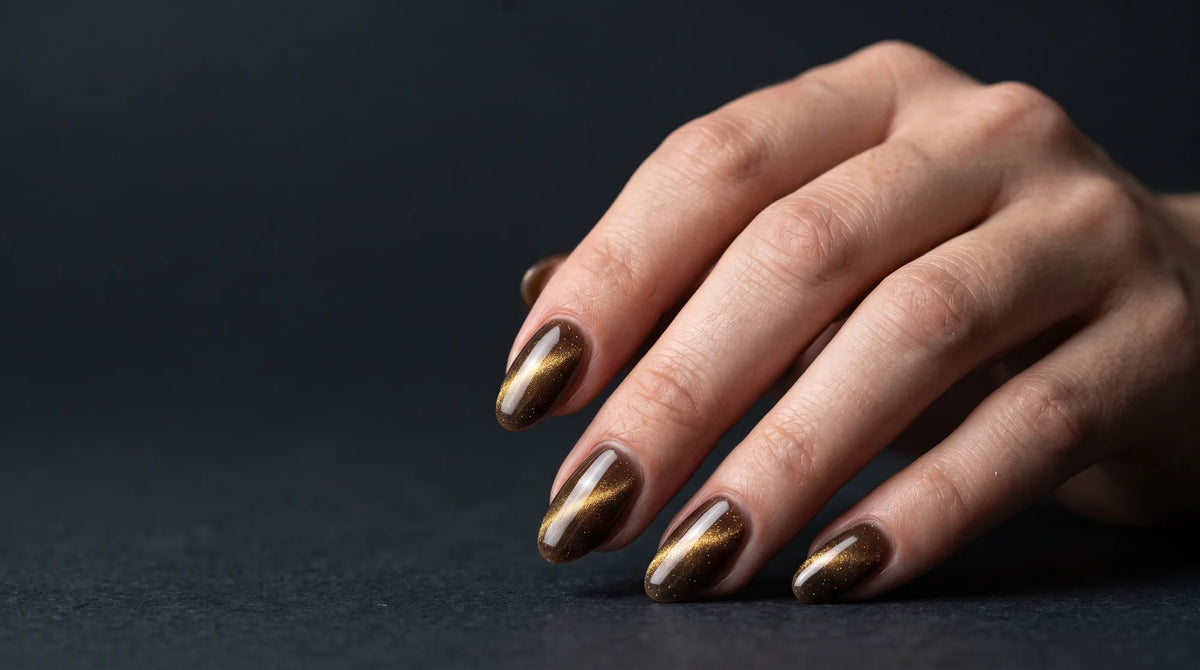
Best Cat Eye Gel Polish: How to Choose the Gel, the Magnet and the …
10 min read
Gel vs Shellac Nails: The Difference, How Long Each Lasts, and Removal
10 min read
How to Stop Biting Your Nails, and How a Gel Overlay Can Help
10 min read
Summer Toe Nails 2027: 15 Pedicure Colours and Designs
12 min read
Free delivery from 330 zł
Shipped from Nice, France
Prepared in 1 to 2 business days
For orders placed before 2 pm, Paris time
14-day returns
From the day you receive your order
Secure payment
Encrypted checkout
Nail tech, salon or distributor? Join the Elegelli professional programme for pro pricing.


