


Base Coat for Builder Gel: Do You Need One? The Correct Order, Step by Step
Do you need a base coat under builder gel? The correct order from dehydrator to top coat, when a rubber base helps, and the mistakes that cause lifting.

Do you need a base coat under builder gel? The correct order from dehydrator to top coat, when a rubber base helps, and the mistakes that cause lifting.

Do you need a base coat for builder gel? It depends on the builder gel and on the nail. A builder gel made to bond directly to the natural nail doesn't need one: on a clean, dehydrated and primed nail, a thin slip layer of the builder itself anchors the structure. A base coat, or better a rubber base, earns its place on soft, thin or oily nails, on clients who lift, or when the builder's instructions ask for it. Whichever you choose, the order never changes: dehydrator, primer, base if you use one, then builder gel.
Our pick

A clear, HEMA-free rubber base with a self-levelling texture. It acts as the base under your structure, cures in 60 seconds under an LED lamp, and can take a second, structured layer when a short nail needs a little more support.
Whatever the system, adhesion is built from the nail up. Each layer has one job, and skipping one is where most lifting starts.
| Step | Product | What it does | Cure? |
|---|---|---|---|
| 1. Prep | Cuticle pusher, soft buffer, file | Removes dead skin and shine, shapes the free edge | No |
| 2. Dehydrate | Prep Booster | Removes natural oils and moisture from the nail plate | No |
| 3. Prime | Acid-Free Primer | Creates the bond between the natural nail and the gel, without harsh acids | No, it air-dries |
| 4. Base (optional) | Rubber Base RB01 | A flexible, self-levelling layer between the nail and the structure | Yes, 60 seconds under LED |
| 5. Builder gel | Builder gel of your choice | Slip layer, then the bead that builds the apex | Yes |
| 6. Top coat | Diamond Top Coat | Seals and shines, with no sticky layer to wipe | Yes, 60 seconds under LED or 120 seconds under UV |
Our guide to nail primer and dehydrator explains steps 2 and 3 in detail, and our step-by-step builder gel guide covers the bead and the apex.

Not always. Builder gels fall into two groups, and the instructions on the jar tell you which one you have.
If you're not sure, test on one nail first rather than on a full set. Our Acid-Free Primer is designed to go after the prep step and before your base coat or builder gel, and it's compatible with all professional nail systems, so it works with either approach.

These three products are often confused. They don't do the same job, and they aren't interchangeable.
| Classic gel base | Rubber base | Primer | |
|---|---|---|---|
| What it is | A thin adhesion layer made for gel polish | A thicker, flexible, self-levelling base | An adhesion promoter, not a layer of gel |
| Cured under a lamp | Yes | Yes (RB01: 60 seconds under LED) | No (Acid-Free Primer air-dries) |
| Adds structure | No | A little; a second layer can build an apex | No |
| Under builder gel | Only if the builder allows it | Yes, as a flexible cushion | Yes, before the base or the builder |
| Best for | Gel polish manicures | Soft, thin or short natural nails | Every client, especially those who lift |
A primer never replaces a base, and a base never replaces a primer: one bonds, the other builds a layer. Our guide to gel base coats and top coats goes further on the base itself.

Already dealing with lifting? Our guide to why builder gel lifts covers the eight causes, and our builder gel buying guide helps you choose the builder to put on top.
Prep, dehydrator, primer, then a base if your builder or the client's nails need one, then a thin builder slip layer, the bead and apex, and finally the top coat. The products that touch the natural nail first are the ones that decide whether the set lasts.
In most cases, yes. A primer creates the bond between the natural nail and the gel. Acid-Free Primer is designed to reduce lifting and goes after the prep step and before your base coat or builder gel, in one thin layer, with no curing.
Not a classic base: it's too thin to build an apex. A rubber base can give short natural nails a little structure, and RB01 can take a second, structured layer for that, but for length, repairs or a real apex you need a builder gel.
Yes. A thin layer of cured rubber base works as a flexible cushion between the natural nail and the builder, which helps on soft or thin nails. Keep it thin and cure it fully before the builder goes on.
Gel polish always needs a base. Builder gel needs a primer in most cases, and a base only if the builder requires it or the nail benefits from a flexible layer. Dehydrating the nail first helps every system.
Build your prep with Rubber Base RB01 Transparent and the rest of our gel base coats, then finish the set with the Milky White Finish Kit: our Milky White builder gel and Diamond Top Coat in one set.
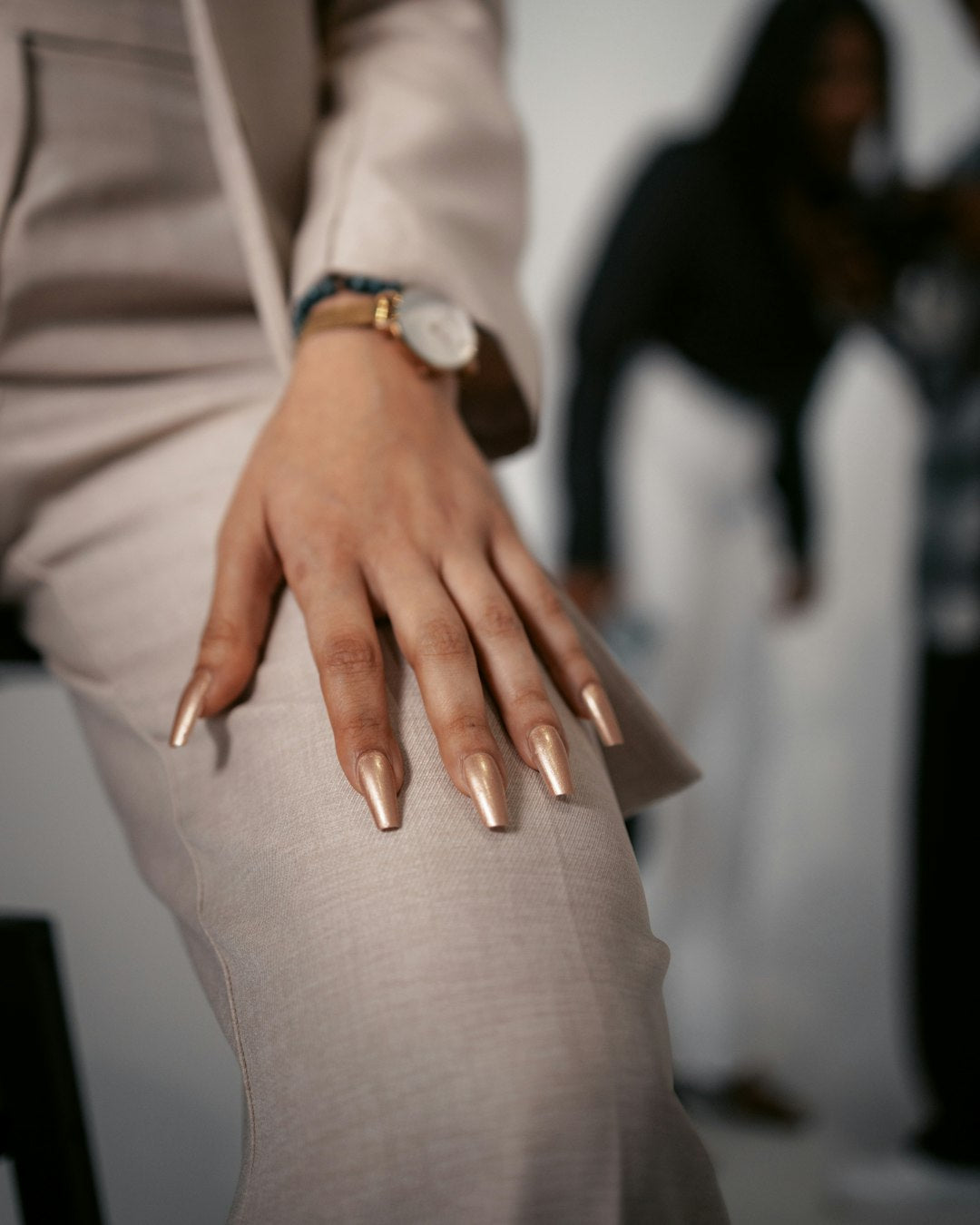
Chrome Nails: How to Apply Chrome Powder, Plus 12 Chrome Nail Designs
How chrome powder turns gel into a mirror, how to seal it so the tips don't chip, and 12 chrome nail designs, from silver and gold to pearl glaze and powder-free metallics.
10 min read

Almond Nails: 15 Almond Nail Designs, from Short to Long
Fifteen almond nail designs, from micro French tips to a golden cat eye, each with the shades and steps to recreate it, plus how to file a neat almond at any length.
10 min read

Builder Gel vs Acrylic: Strength, Odour, Removal and How to Switch …
Builder gel vs acrylic compared for nail techs: strength and flexibility, odour, application, removal and nail health, plus how to switch an acrylic client to builder gel.
10 min read

Polygel vs Builder Gel: Differences, Pros and Cons, and Which One f…
An honest comparison of polygel and builder gel for nail techs: how each one is applied and removed, how they wear, and which one to choose for each client.
9 min read
Free delivery from Dhs. 200
Shipped from Nice, France
Prepared in 1 to 2 business days
For orders placed before 2 pm, Paris time
14-day returns
From the day you receive your order
Secure payment
Encrypted checkout
Not sure which shade or product to choose? Talk it through with one of our nail experts.
Book my consultationNail tech, salon or distributor? Join the Elegelli professional programme for pro pricing.


